
2020-2021 College Fellows
Chukwuma Agubokwu, Theater, Dance & Media

I seek to identify low-level mechanisms that support complex human social behaviors such as punishment, cooperation, moral judgment, and extortion. I also use neuroimaging to explore how our brains allow us to think about the world beyond the here and now, for example how our brains differentiate our beliefs from our desires, and how they engage in modal thought.
Alexis Brown, Art, Film and Visual Studies/Theater, Dance & Media

I am an archaeologist focusing on the behavioral evolution of modern humans and closely related hominids, such as Neanderthals. I am particularly interested in human mobility and land use and how that translates to social connectivity in the past. Much of my research has been geographically based in Western Europe and North Africa but I am interested in comparing the archaeological signatures of hunter-gatherer mobility and land use worldwide.
Garth Coombs, Psychology
My research focuses on the dynamics between sleep behaviors and experiences of stress and their role in mental health. I aim to better understand how the interrelationships of stress and sleep may shed light on factors that put us at risk for, or make us resilient to, developing psychiatric disorders, particularly during major life transitions such as adolescence or beginning college. My research interests have inspired one of the courses I am teaching here at Harvard: Psychology of Sleep. I will also be teaching a year-long tutorial for Senior Thesis students, as well as a Sophomore Tutorial that focuses on how to think and write like a psychology researcher.

My current research focuses on Wolof literature and Film as a form of “ideopraxis” in the Senegalese cultural liberation struggle. My book project, A History of Wolof Prose and Drama, is a study of the development of Wolof literature in the 20th and 21st centuries. It examines, through a comparative and diachronic perspective, how Wolof literature written and published in the Latin script, represents a new national and transnational literary tradition through a revisiting of the use of the metropolitan language, i.e. French, as the sole medium of the Senegalese national literature. It looks at the evolution from the early literature of assimilation published in French to the birth of a new literary democratized and culturally liberated tradition since the nineteen-seventies. This project inscribes itself in a larger debate on African modernity and on the challenges brought forward against the civilizing mission of the European colonial project of modernization.
Daniel Green, Human Evolutionary Biology
Jennifer Halen, Government
I am a political scientist working on issues relating to the ways in which new and emerging technologies influence, and are influenced by, politics and government. Broadly, my research focuses on issues such as the political and social implications of Artificial Intelligence (AI) and Machine Learning (ML), innovative applications of Virtual Reality (VR), new approaches to enabling educational opportunities in carceral facilities, and prison/police abolition. I used mixed-methods approaches to analyze these issues and the ways in which they interact with social inequities.

I study social influences on student motivation. I am particularly interested in the quality of student motivation, or whether students are approach-motivated (success-focused) or avoidance-motivated (failure-focused). In my work I explore how students are affected by the stress from high expectations, stereotypes, and competing with others. The aim of my work is to design interventions that optimize student motivation.
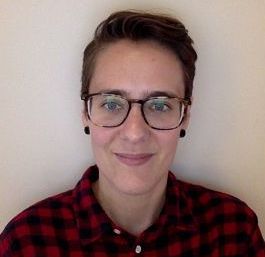
My research sits at the intersection of sociocultural and medical anthropology, Science and Technology Studies (STS), and critical gender and race studies, and examines the diverse applications of genetic technologies across medicine, market, and legal system in the US. I am currently working on a book manuscript titled “Future Pending: Californian Genomics and the Politics of Biology.” At different ethnographic scales, the book tracks genomics as an emerging biomedical and biometric infrastructure that implicates Californians in a range of social engineering projects. My second ethnographic project investigates the uses of genetic technologies in precision psychiatry. I hold a Ph.D. from the University of Chicago (2015) and Mag.Phil. from the University of Vienna (2004).
Erica Jackson, Art, Film and Visual Studies

I investigate how musical time and form are perceived and conceptualized during the act of listening, with a particular interest in process and ambient music. I propose new methods of analysis for capturing and comparing in-time perceptions, blending cognitive theories of event models and embodied mind with phenomenological reflections and accounts. I am currently working on an event-driven method for analyzing processual forms in minimal and spectral music, as well as a project that extends meter theory to music that references, yet evades, traditional conceptions of meter. Longer term, I am exploring applications of process and ambient thinking in interactive situations (live improvisations), electronica (trance, chillwave), and multimedia (ambient film scoring).

I am a literary historian with a disciplinary focus on South Asian studies and comparative literature. I hold a PhD in Asian Literatures, Cultures and Media from the University of Minnesota. My work engages the speech-writing dyad, indigeneity, literary theory and theories of caste, gender and race to study 19th and 20th century literature, social movements and political thought. My current book project On Common Language: Vulgar Speech, Vernacular Literature and Communal Selves analyzes vernacular concepts of the self and community in Telugu literature (drama, poetry, linguistic tracts) and social movement texts (speeches, journals, pamphlets) that span a hundred-year period from the turn of the twentieth century (1890-1990). The manuscript investigates the literary and sociological terrain upon which language is produced as a common and the exclusions that are built into linguistic thinking in this archive.
Glory Liu, Social Studies
I am a political theorist with interests in political thought, political economy, and intellectual history. I'm currently writing a book on the reception of Adam Smith's ideas in American history from the eighteenth century to the present. I also study the diversity of moral objections to inequality in public opinion. Outside of my research, you can probably find me in one of Boston's or Providence's dance studios, where I spend a lot of time training and performing as a contemporary ballet dancer.
Kathryn McKeough, Statistics
I graduated from Harvard University with a PhD in Statistics. My research is focused on applications in various domains including predicting future performance of athletes and segmenting sparse and noisy astronomical images.

My research interests lie mainly in moral, political, and social philosophy. My recent research has centered on the topic of historical injustice claims; the relation between distributive justice and justice in rectification; institutional and group agency/responsibility; and questions regarding the division of responsibility between individuals and institutions. I also have some long-standing research interests in the concept of harm; the non-identity problem; group rights, and Rawlsian political theory.

My research focuses on the social and cultural history of ancient Rome. My current project explores the role of music in Roman society during the republican and early imperial periods. I am also interested in Roman theatre and spectacle more widely, as well as the history of ancient slavery and popular culture.
Robert Landon Morrison, Music
I study the role of technological mediation in 20th- and 21st-century sonic practices, focusing on electroacoustic sound, timbre, microtonality, and popular music culture. My research aims to draw music and media studies into a cross-disciplinary dialogue that tracks the transductive flow of sounds across diverse media environments and technical infrastructures. While at Harvard, I am teaching undergraduate music courses, as well as graduate seminars on the analysis of timbre (Fall '20) and musical media (Fall '19). Before arriving, I completed my PhD in Music Theory at McGill University, where I also taught as a course lecturer on topics ranging from theory fundamentals to popular music history.

My research takes biochemical and microbiological approaches to study the assembly and function of the outer membrane of Gram-negative bacteria. The lipopolysaccharide component of this membrane creates a barrier to many small molecules including antibiotics, limiting the treatment options for infections by these types of bacteria. I am interested in how certain species of bacteria can survive without the unique lipopolysaccharide component of the membrane, while other closely related species seemingly cannot.

My research focuses on how and why people regulate their emotions in response to adverse events. I am particularly fascinated by individuals’ natural inclination to create alternate scenarios from events that have occurred as a way to process the event. In the next couple years, I hope to explore how adolescents and adults make similar decisions about when and how to actively regulate their emotions.
Jennifer Perry, Psychology
I am a social psychologist and affective neuroscientist studying how social group memberships shape our cognition, emotion, and behavior. I try to understand how racial group membership and social power alters how we think, feel, and act towards other people. Lines of research include: the link between racial phenotypicality, stereotypes, and discrimination, how we perceive the pain and suffering of others, and how we evaluate the social status of people belonging to different social groups.

I am a drama historian and theater practitioner. My book manuscript, The Radiant Abyss: Boredom on the Modern Stage, examines the symbiotic histories of theatrical innovation and boring aesthetics from Existentialist philosophy of the nineteenth century to the present moment, with key studies on Maeterlinck, Chekhov, and Beckett. My second book project is about narcissism and performance and it is called Vanity Projects. I also serve as the Executive Director of the Mellon School of Theater and Performance Research here at Harvard, and teach and write about feelings, novels, prisons, acting, and contemporary performance.

I am a College Fellow on Social Studies at Harvard University. I conduct research in political theory and the history of political thought, with particular interests in democratic theory, conceptualizations of social oppression, and the intersections of American, Afro-modern, and South Asian political thought. My current book project draws on rich historical and philosophical connections between John Dewey, B.R. Ambedkar, and Brown v. Board of Education in order to offer an original account of the compatibility of coercive state action with a radical vision of democracy. I received my Ph.D. in Political Science from Yale University in 2019 and hold a B.A. in English and Political Science magna cum laude from Williams College.
Philip Redko, Slavic Languages and Literatures

I study moral psychology, early Chinese ethics, social epistemology, and virtue ethics. My research focuses on ways non-normative information should constrain and guide our normative theorizing. I've written about the intersection of social intelligence and virtue ethics, as well as situationist psychology and moral development in the context of early Confucian ethics, and I'm currently working on epistemic injustice and rhetorical manipulation.
Jacob Rode, Psychology
In my research, I apply social psychological theories and methods to study topics in sustainability. My current work investigates the role motivated reasoning, political polarization, and partisan bias play in shaping environmental and climate change attitudes. The goal of my research is to identify the drivers of sustainable attitudes and behaviors.
Vivian Shaw, Sociology
I am a College Fellow in the Department of Sociology at Harvard University and the Lead Researcher (co-PI) for the AAPI COVID-19 Project a multi-method investigation into the impacts of the pandemic on the lives of Asian Americans and Pacific Islanders. I earned her Ph.D. in Sociology from the University of Texas at Austin with graduate portfolios in Asian American Studies and Women’s & Gender Studies. From 2018-2019, I was a Postdoctoral Fellow in the Weatherhead Center for International Relations’ Program on U.S.-Japan Relations, also at Harvard. I am currently working on a book that examines the ways that disasters shape political contestations over the meanings of governance, citizenship, and social inclusion. Exploring these boundaries, the book analyzes the rise of nativist, far-right groups in Japan, alongside the rise of antiracism/antifa movements in the wake of the 2011 Fukushima nuclear disaster.

I study social behavior in nonhuman (and occasionally human) primates. Much of my work to date has focused on post-conflict behavior, and specifically resolution strategies like reconciliation that mitigate aggression in social groups. My most recent research centers on consolation, which is considered a key behavioral marker of socio-emotional capacities like empathy. More specifically, I'm interested in comparative developmental approaches to the study of consolation behavior, results of which often challenge prevailing assumptions about the expression of empathy within and across species. Simultaneously, I have a deep and growing passion for animal ethics, human-animal relations, and the role of ethology (and science more broadly) in the animal turn.
Andrew Yegian, Human Evolutionary Biology